Code Vulnerability Analysis
for SAP

SAP Code Vulnerability Analysis plays a pivotal role in ensuring the security and integrity of SAP applications, which are vital components of many modern enterprises. As organizations increasingly rely on SAP systems to manage critical business processes and sensitive data, the need to identify and address potential vulnerabilities, such as ICMAD and P4CHAINS, becomes paramount.


SAP code vulnerabilities expose applications to a range of security risks, including data breaches, unauthorized access, and service disruptions. Conducting a comprehensive analysis of the underlying code is essential to proactively identify weak points and mitigate potential threats before they impact production environments.

Common Types of SAP Code Vulnerabilities

SAP applications are susceptible to various code vulnerabilities that can compromise overall system security and functionality. Security administrators must monitor for the following common vulnerability types:

Occurs when malicious SQL queries are injected into an application’s input fields, allowing attackers to manipulate databases, steal data, or gain unauthorized access.

Enables attackers to inject malicious scripts into web pages viewed by users, leading to the theft of sensitive information or the execution of arbitrary actions.

Remote Code Execution vulnerabilities allow attackers to execute malicious code on a remote server, potentially taking control of the entire system and compromising data and resources. For example, recent threat intelligence identified a critical SAPSprint RCE vulnerability (CVE-2025-42937), demonstrating how unauthenticated attackers can exploit path traversal flaws to overwrite dynamic link libraries and execute arbitrary operating system commands with elevated system privileges.

Exploited by attackers who manipulate input fields to navigate outside the intended scope, granting unauthorized access to restricted files or directories.

Inadequate or improper authentication mechanisms grant unauthorized users access to sensitive functionalities or data within the SAP application.

Best Practices for SAP Code Vulnerability Analysis

Importance of regular code reviews in SAP development

Regular code reviews play a crucial role in ensuring the security of SAP development projects. In the context of SAP development, where complex business processes and sensitive data are often involved, the importance of code reviews becomes even more pronounced. Here’s why regular code reviews are essential in SAP development:

Identifying and Preventing Vulnerabilities

Code reviews help in identifying security vulnerabilities, such as SQL injection, XSS, and authentication issues, before they are deployed to production. This proactive approach prevents potential security breaches and data leaks that could have severe consequences for the organization.

Maintaining Coding Standards

SAP development often involves multiple team members working on different components. Regular code reviews ensure that all code adheres to established coding standards, which is a foundational requirement to strengthen DevSecOps practices, making the codebase consistent and easier to maintain.

Ensuring Functional Accuracy

Code reviews help validate that the developed code accurately reflects the intended functionality specified in the requirements. This reduces the likelihood of functional errors and ensures that SAP applications operate as expected.

Optimizing Performance

Reviewing code allows developers to identify performance bottlenecks, inefficient algorithms, and resource-intensive operations. Addressing these issues during code reviews helps optimize the overall performance of SAP applications.

Enhancing Collaboration

Code reviews encourage collaboration and knowledge sharing among developers. Team members can learn from each other’s code, share best practices, and suggest improvements, leading to a more skilled and cohesive development team.

Early Detection of Bugs and Defects

Code reviews catch bugs, logic errors, and defects at an early stage of the development lifecycle, reducing the cost and effort required to fix them later in the process.

Leveraging static code analysis tools for vulnerability detection

Utilizing static code analysis tools for vulnerability detection provides a proactive and automated approach to identifying potential security issues during the development phase. Static code analysis involves analyzing the source code of an application without executing it. This process helps developers and security professionals find security flaws, coding mistakes, and vulnerabilities exploited by malicious actors. When applied to SAP development, these tools specifically analyze the code within SAP applications to uncover vulnerabilities unique to the proprietary SAP environment.


Onapsis Ransomware Attacks Protect

Integrating code review into the SAP development lifecycle

Integrating code review into the SAP development lifecycle is essential for ensuring the security, quality, and reliability of SAP applications. Code reviews help identify and address vulnerabilities, improve code quality, and promote collaboration among development teams. Here are just a few ways on how to effectively integrate code review into the SAP development lifecycle:

  • Establish Code Review Policies: Define clear and well-documented code review policies that outline when, how, and why code reviews should be conducted. Specify the roles and responsibilities of team members involved in the review process.
  • Select Reviewers: Choose experienced developers or security experts to participate in code reviews. Reviewers should have a deep understanding of SAP development, coding standards, and security best practices.
  • Define Review Criteria: Establish criteria for code review, including security checks, coding standards adherence, performance considerations, and functional accuracy. Clearly communicate these criteria to the development team.

SAP Code Vulnerability Scanning Tools from Onapsis

Onapsis Control is a platform designed to assess and manage the security and compliance of SAP environments. It helps organizations identify and remediate vulnerabilities, misconfigurations, and compliance issues within their SAP system.

Within Onapsis Control, there are five product aspects:
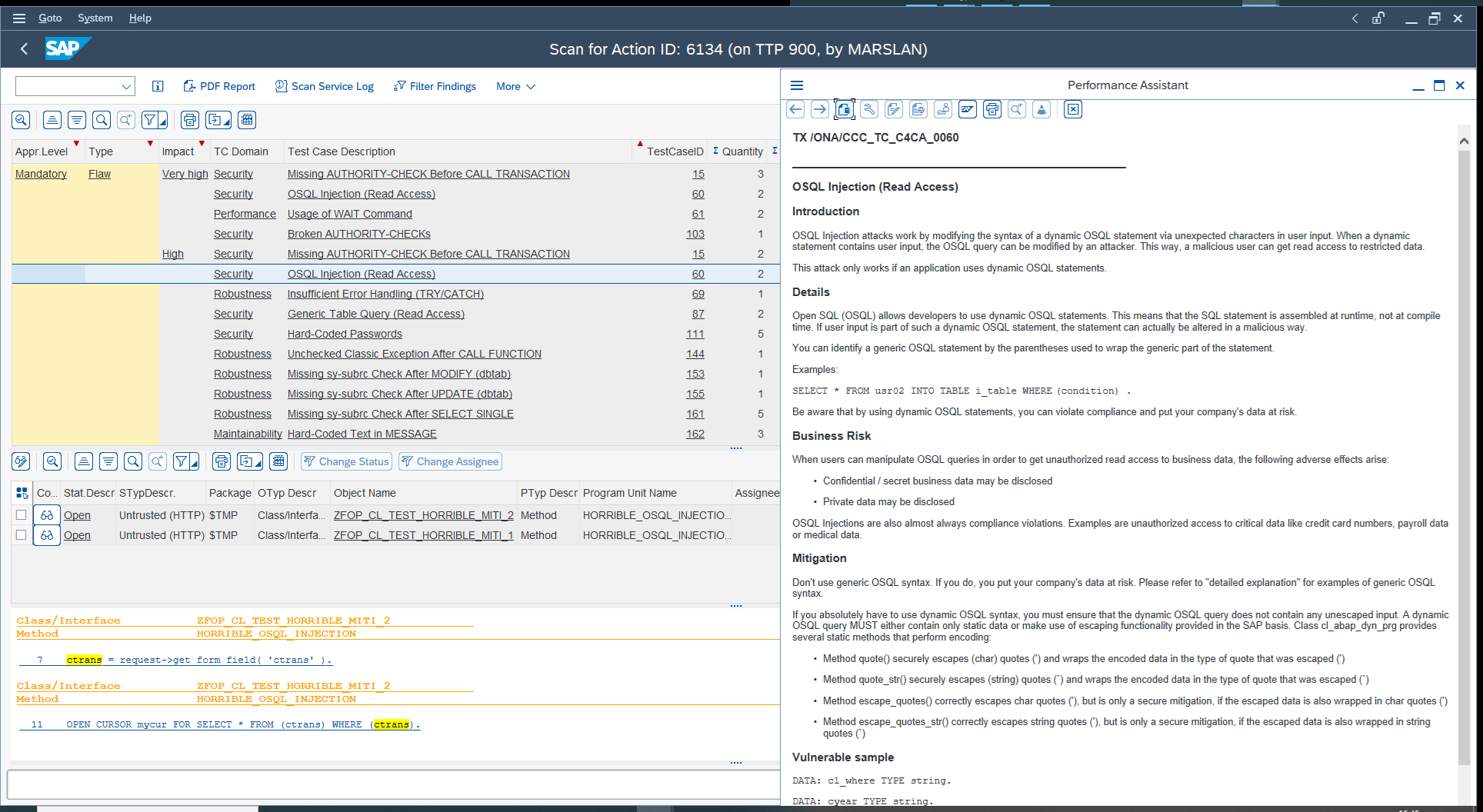
  • Control for Code
  • Control Central
  • Control for Transports
  • On-Change Control
  • One Click Fix Premium
Onapsis code

FAQs about SAP Code Vulnerability Analysis

Neglecting SAP code vulnerability analysis has severe consequences for organizations, data integrity, and business operations. Failing to address code vulnerabilities in SAP applications leads directly to a range of security, financial, and reputational risks, including massive data breaches, financial losses, business interruption, and regulatory fines.

SAP code vulnerability analysis is a fundamental element within the broader security posture of an organization, particularly when SAP applications are integral to core operations. It plays a critical role in identifying, addressing, and managing security risks specific to SAP systems by enabling risk assessment and mitigation, proactive security measures, compliance alignment, and integration with the Secure Development Lifecycle (SDL).

Yes, there are specific compliance requirements related to SAP code vulnerability analysis, and organizations may need to adhere to various regulatory standards and frameworks. A few examples of compliance requirements that may be relevant to SAP code vulnerability analysis are GDPR (General Data Protection Regulation), SOX (Sarbanes-Oxley Act), ISO 27001 (Information Security Management System), PCI DSS (Payment Card Industry Data Security Standard), and HIPAA (Health Insurance Portability and Accountability Act).

Onapsis offers specialized tools for secure software development through the Onapsis Control platform. Security teams deploy this platform to automatically scan custom SAP code for vulnerabilities, enforce Secure-by-Design coding standards, and block insecure application transports from reaching production environments.

Onapsis integrates with existing enterprise security systems by feeding SAP-specific threat intelligence directly into central Security Information and Event Management (SIEM) and IT service management platforms. This integration enables security operations centers to correlate SAP vulnerability data with broader network alerts and automate incident response workflows.

Onapsis monitors changes within SAP systems by continuously analyzing system configurations, user authorizations, and transport requests. The platform enforces established security baselines and instantly alerts administrators to unauthorized modifications or insecure custom code deployments before they impact core business operations.

Part of the Onapsis Platform

Not quite ready for a live demo, but want to see Onapsis Control in action?

View this two-minute on-demand video of Control to see how we can solve your organization’s unique challenges.

In this video, you will:

  • Get an understanding of Onapsis Control and its key features.
  • Discover how Onapsis Control empowers you to establish and enforce secure configuration standards across your applications.
  • Learn how Onapsis Control seamlessly integrates security into the application development lifecycle.