Applying the NIST Incident Response Lifecycle to SAP environments provides organizations with a standardized methodology to prepare for, detect, and recover from severe cyberattacks. Because SAP systems house mission-critical data, integrating structured incident response protocols into an overarching SAP GRC strategy prevents catastrophic operational downtime and secures sensitive enterprise records.
The Four Phases of SAP Incident Response
The National Institute of Standards and Technology (NIST) outlines a four-step incident response lifecycle. Security teams utilize this structure to align enterprise resource planning defenses with established NIST Cybersecurity Framework principles, shifting SAP security from reactive patching to proactive threat management.
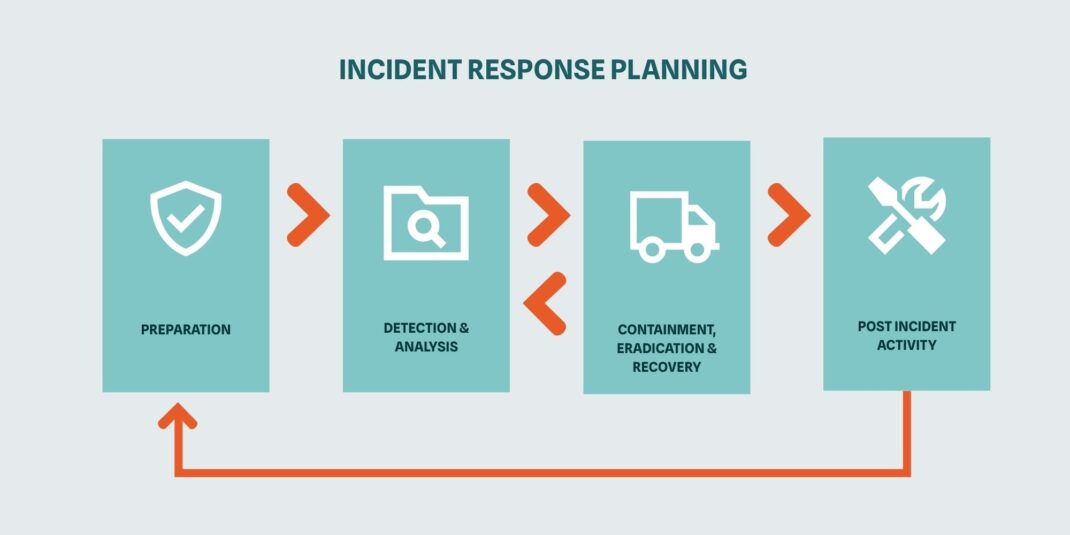
Traditional network security tools lack the application-layer visibility required to protect complex SAP landscapes. By applying the NIST lifecycle directly to the SAP environment, organizations establish clear, repeatable protocols for handling sophisticated application-level threats.
Phase 1: Preparation
Preparation requires organizations to establish a hardened SAP baseline and deploy continuous monitoring tools before an attack occurs. Security administrators must catalog SAP assets, apply critical security patches, and enforce strict SAP access risk management to limit the available attack surface.
The preparation phase serves as the foundation of SAP incident response. Organizations cannot defend undocumented systems or unpatched vulnerabilities. Security teams must map the entire SAP architecture, identifying legacy custom code and unsecured interfaces. Furthermore, administrators must configure the SAP Security Audit Log (SAL) and related telemetry sources to ensure the system actively records the data necessary for future forensic investigations.
Phase 2: Detection and Analysis
Detection and analysis involve identifying malicious activity within the SAP application layer in real time. Security operations centers monitor SAP transaction logs, background jobs, and user behavior to identify indicators of compromise that standard network firewalls frequently miss.
Because SAP systems generate massive volumes of daily operational data, identifying a cyberattack requires specialized application-aware threat detection. Threat actors frequently exploit SAP-specific vulnerabilities to bypass traditional security perimeters, creating unauthorized administrative users or manipulating financial tables. Incident response teams must utilize automated platforms to analyze this telemetry, filter out false positives, and accurately categorize the severity of the threat.
Phase 3: Containment, Eradication, and Recovery
Containment, eradication, and recovery strategies allow organizations to isolate compromised SAP components without disrupting global business operations. Incident response teams utilize predefined playbooks to disable compromised user accounts, remove malicious ABAP code, and restore systems to a trusted state.
Taking an entire SAP production system offline during an active attack causes severe financial damage. The containment phase focuses on stopping the lateral movement of the threat actor while keeping critical business functions operational. Once isolated, the eradication phase removes the root cause of the breach, such as deleting a malicious transport request. Finally, the recovery phase securely restores the affected SAP services and continuously monitors the system for reinfection.
Phase 4: Post-Incident Activity
Post-incident activity requires security teams to analyze the breach and implement structural improvements to prevent future occurrences. Organizations use this phase to update security policies and refine their overall approach to SAP compliance.
The NIST lifecycle is a continuous loop. Following a security event, enterprise leaders conduct comprehensive post-mortem analyses to identify why the breach occurred and how the incident response plan performed. Security administrators apply these lessons to the preparation phase by hardening misconfigured parameters, updating access roles, and documenting new compliance evidence.
Operationalizing NIST IR with Automated Compliance
Integrating purpose-built security platforms enables organizations to execute the NIST Incident Response Lifecycle efficiently. By automating SAP compliance audits and threat detection, security teams replace manual investigations with continuous, automated oversight.
Executing the NIST lifecycle manually across a sprawling SAP landscape is a highly inefficient process. Organizations achieve automated compliance and robust incident response by deploying platforms that bridge the gap between technical vulnerabilities and regulatory frameworks.
Within this architecture, the Onapsis Platform translates abstract NIST guidelines into enforceable technical controls. Security teams utilize Onapsis Assess to identify missing patches and enforce the hardened system baseline required during the preparation phase. During an active attack, Onapsis Defend automates the detection phase by providing the real-time application telemetry required for security operations centers to execute rapid containment and recovery.
Frequently Asked Questions About NIST Incident Response
How does the NIST Incident Response Lifecycle apply to SAP?
The NIST Incident Response Lifecycle applies to SAP by providing a structured, four-phase framework to handle cyber threats targeting enterprise resource planning systems. Security teams use this methodology to prepare SAP landscapes, detect application-layer attacks, contain active threats without causing business downtime, and conduct post-incident analyses.
Why is the Preparation phase critical for SAP security?
The Preparation phase is critical for SAP security because it establishes the defenses required to detect and stop an attack. Organizations must utilize the preparation phase to apply missing security patches, secure custom ABAP code, and configure SAP audit logs. Without these preparations, identifying and containing an active SAP breach becomes impossible.
How do organizations automate SAP incident response?
Organizations automate SAP incident response by deploying specialized continuous threat detection and compliance such as the Onapsis platform. Tools like Defend automate the detection and analysis phase by actively monitoring SAP telemetry for indicators of compromise. This instantly alerts security operations teams, and providing the forensic data required for rapid containment.